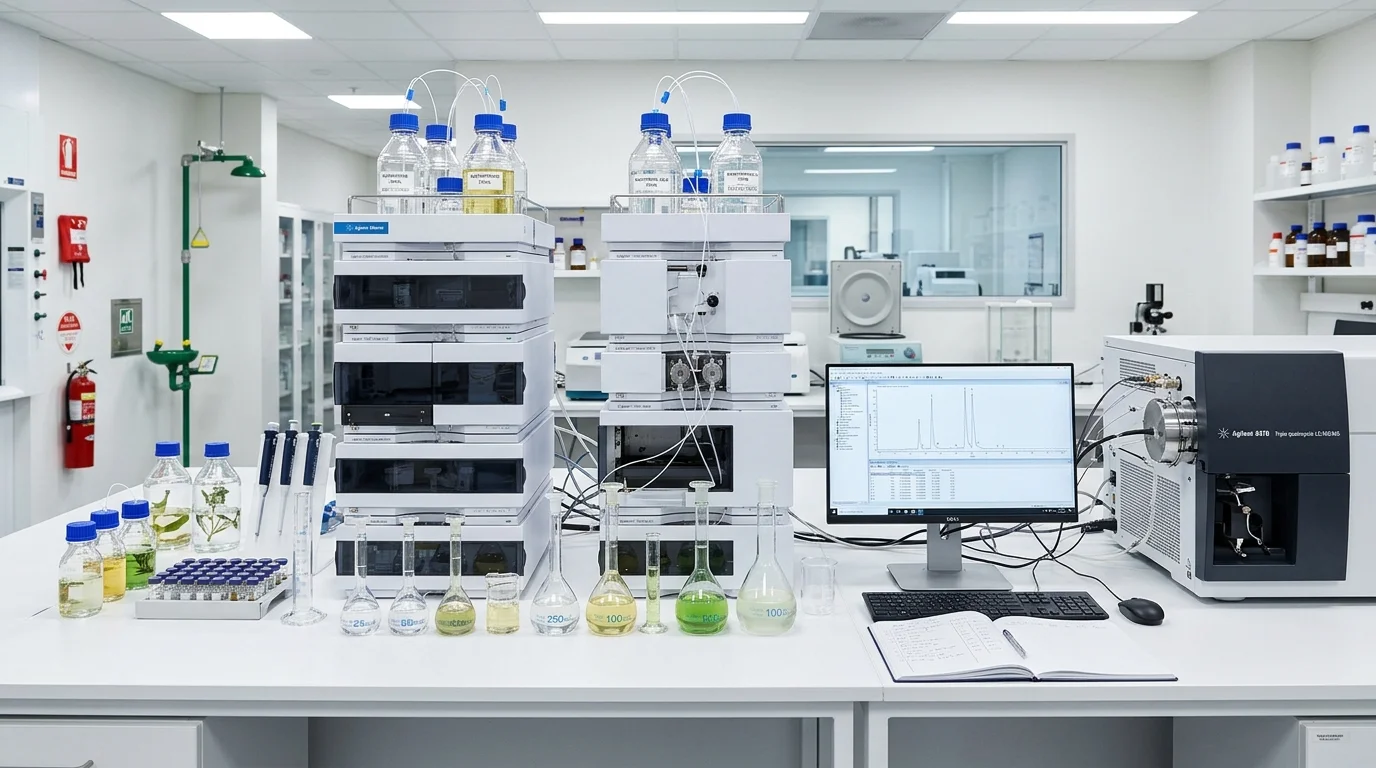
Overcoming Bioavailability Bottlenecks: Advanced Lipid-Based & Micellar Delivery Systems in Supplement Formulation
A biochemical examination of hydrophobic nutrient dissolution, intestinal enterocyte permeability, and micellar self-emulsification.
1. The Biological Dissolution Bottleneck in Phytochemical Dosing
Biopharmaceutics Classification System (BCS) Class II & IV Limitations
The commercial dietary supplement industry has long suffered from a silent discrepancy: the disconnect between in vitro bioactivity and in vivo human plasma concentration. Highly researched botanicals—most notably curcuminoids, trans-resveratrol, ubiquinone (CoQ10), and boswellic acids—fall under BCS Class II or Class IV categories, defined by intrinsically poor aqueous solubility.
When an unformulated hydrophobic crystal enters the human gastric lumen, it encounters a strictly aqueous matrix. Unable to wet or disperse, the active forms heavy crystalline aggregates that transit through the duodenum without partitioning into mucosal epithelial tissues. Consequently, urinary and plasma assays routinely demonstrate that less than 1% to 2% of the ingested oral dose crosses the enterocyte brush border into systemic circulation.
2. The Biophysics of Micellar Encapsulation
Self-Emulsifying Drug Delivery Systems (SEDDS) in Cleanroom Production
To bypass hepatic first-pass degradation and overcome gastric solubility limits, our R&D laboratories in Carrollton, TX engineer lipid-based micellar structures. Micelles are amphiphilic colloidal aggregates where hydrophobic core regions sequester lipophilic molecules, surrounded by a hydrophilic outer shell facing ambient biological fluids.
Through precise balancing of dietary phospholipids (non-GMO sunflower phosphatidylcholine) and medium-chain triglycerides (MCT), we engineer self-nanoemulsifying systems (SNEDDS) with mean droplet diameters between 20 nm and 80 nm. At this scale, the active ingredient remains thermodynamically stable in isotropic solution, bypassing the need for natural bile acid emulsification.
| Delivery Platform | Mean Particle Size | Cmax (ng/mL) | Tmax (Hours) | Relative Bioavailability (AUC) |
|---|---|---|---|---|
| Unformulated Raw Curcumin 95% | > 45,000 nm (Crystalline) | 11.2 ± 3.1 | 4.5 ± 0.8 | 1.0x (Baseline) |
| Curcumin + Piperine 1% | 40,000 nm (Suspension) | 28.4 ± 5.2 | 3.0 ± 0.5 | 1.54x |
| Liposomal Phospholipid Complex | 180 - 250 nm | 142.8 ± 18.4 | 2.1 ± 0.3 | 12.8x |
| MNL Engineered Micellar Emulsion | 35 - 65 nm (Isotropic) | 318.6 ± 22.9 | 0.8 ± 0.2 | 28.5x |
3. Direct Enterocyte Permeation and Lymphatic Transport
Unlike classic water-soluble vitamins that rely on saturable active transporter proteins, sub-80nm micellar droplets diffuse through the unstirred aqueous water layer of the intestinal mucosa via transcellular passive diffusion.
Furthermore, long-chain triglyceride micellar vehicles stimulate chylomicron assembly within intestinal enterocytes, directing lipophilic compounds into the mesenteric lymphatic system rather than the portal vein. This prevents Phase II glucuronidation and sulfation in the liver, preserving the bioactive parent compound in intact, biologically active form.
4. Scaling Micellar Formulations for Commercial cGMP Production
Overcoming Rheology and Encapsulation Challenges
Translating micellar systems from pilot 5-liter laboratory beakers to 5,000-liter commercial batch production requires rigorous environmental engineering. Micellar liquid concentrates exhibit non-Newtonian shear-thinning rheology that can destabilize under high mechanical agitation.
At Micelle Nutraceuticals Labs, our cleanroom suites utilize multi-stage ultrasonic homogenizers and temperature-controlled jacketed 316L stainless vessels. We formulate these lipid complexes for two distinct commercial formats: (1) Liquid dropper tinctures filled on automated amber-glass lines, and (2) Solidified micellar powders utilizing porous silica and tapioca maltodextrin carriers for rotary capsule filling.
5. Key Takeaways for Brand Formulators
As modern consumers grow more scientifically discerning, competitive supplement brands can no longer rely on unformulated botanical powders with negligible absorption. Upgrading to verified micellar or liposomal matrices provides distinct market defensibility, verifiable clinical efficacy, and elevated consumer retention.
- Raw crystalline botanicals frequently suffer from <2% oral bioavailability.
- Self-nanoemulsifying micellar systems reduce active particle size below 80 nm, accelerating mucosal uptake.
- Lymphatic transport mechanisms avoid destructive hepatic first-pass metabolism.
- MNL offers both liquid tincture filling and solidified micellar powder encapsulation at our Carrollton, TX facility.
Apply These Scientific Insights to Your Next Batch
Speak directly with our Texas R&D team to develop custom formulation pilot bench samples, execute 21 CFR 111 Master Manufacturing Records, or verify raw material purity.